The water we drink, the food we consume, and the ecosystems surrounding us now share a silent challenge—invisible to the naked eye but with a massive impact on global public health: Emerging Contaminants.
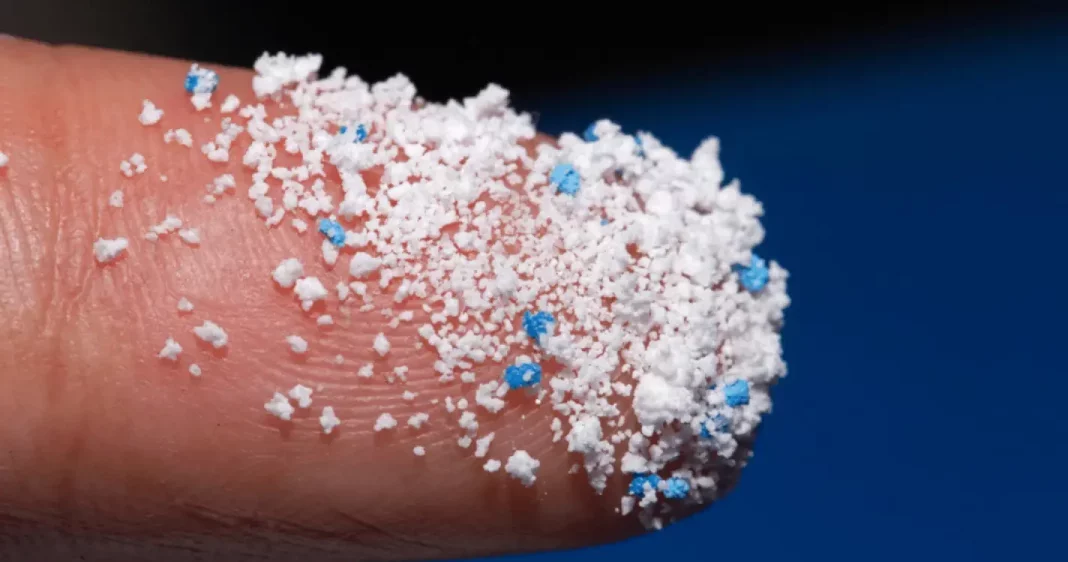
Among thousands of chemical compounds, pharmaceuticals, and industrial residues, one category has taken absolute center stage in environmental and governmental agendas: microplastics and nanoplastics.
This is not just a future concern; it is a current emergency. The United States Environmental Protection Agency (EPA) has directed massive efforts toward microplastics research, focusing on three fundamental pillars:
- Measurement Methodologies: Developing precise ways to quantify these particles across different matrices (water, soil, biological tissues).
- Health and Ecological Impacts: Understanding the toxicology and the effects of particle accumulation in living organisms.
- Removal and Mitigation: Identifying and validating technologies capable of removing microplastics from water sources.
The great challenge pointed out by researchers is clear: how can we study and combat an enemy that most standard laboratories cannot even see clearly?
This is where scientific research hits the technological limits of the market. To understand the true impact of microplastics on human health (especially when they degrade into nanoplastics), precision is non-negotiable.
Standard analytical techniques, such as traditional FTIR, are limited by a spatial resolution of 10 to 20 µm. On the other hand, methods like Pyrolysis GC-MS, while effective for chemical identification, physically destroy the sample. This makes detailed morphological studies (size and shape) impossible—data that is vital for the toxicological studies demanded by the EPA and other government programs.
To meet the demands of top-tier research, detection must break the diffraction barrier. This is exactly the solution that EP Aqua brings to the environmental testing market.
By utilizing OPTIR (Optical Photothermal Infrared) Spectroscopy, our laboratory achieves sub-micron spatial resolution (down to 500 nm). This means we can map, identify, and quantify nanoplastics without destroying the sample, preserving its integrity for repeated toxicological assays.
Beyond cutting-edge hardware, EP Aqua has combined speed with precision through Artificial Intelligence. With automated morphological sorting models (validated by senior experts), we can process large volumes of data with up to 80-85% reliability, ensuring the scalability required for large-scale clinical and environmental studies.
Research on emerging contaminants leaves no room for doubt. Data quality defines the success of public health policies and innovations in water treatment.
With ISO 17025 certification and the international ILAC-MRA seal, EP Aqua guarantees precise, traceable (via MyLIMS and ConfLab portals), and legally defensible analyses worldwide.
Are you leading a research project or in need of strict regulatory compliance for emerging contaminants?
Talk to our experts and discover how our laboratory solutions can elevate your project.